
The Life-Giver
Peter said, “You killed the author of life, but God raised him from the dead.” Acts 3:15
The religious leaders came to watch an execution. They mocked the man who hung on the cross. “‘He saved others,’ they said, ‘but he can’t save himself’” (Matthew 27:42). His crucifixion was a victory for them: the popular rabbi wouldn’t charm any more crowds, collect any more followers, or ask any more uncomfortable questions. He was finished, dead, buried.
But that’s where their logic was flawed. Jesus of Nazareth wasn’t a man who had been given life—a life that his Roman executioners could snuff out. He was the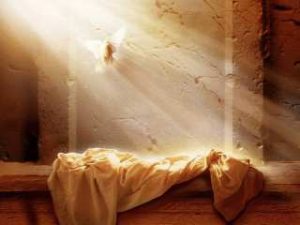 life giver—the “author of life” as Peter proclaimed in Acts 3:15.
So why does Peter say God raised the “author of life … from the dead”? This puzzling statement illustrates the difficulty of expressing a supernatural reality in human language. God is a triune being—Father, Son, and Holy Spirit. The Greek word theos, translated “God” in the New Testament, refers to the Trinity.[1] Thus, the phrase “God raised him”—used in Acts 3:15 and elsewhere in the New Testament—indicates that all three persons of the Godhead played a part in the resurrection of Jesus just as all three persons of the Godhead loved the world and implemented their plan of redemption by sending Jesus to earth (John 3:16).
The phrase “author of life” has a trifold meaning: Jesus is the source of life, the one who rules over life, and the one who leads others into life. The apostle John wrote, “Through [Jesus] all things were made. … In him was life, and that life was the light of men” (John 1:3). No power on earth can extinguish the source of life—any more than shutting off a faucet in my house can extinguish the source of water in my community.
As the one who rules over life, Jesus vanquished death, permanently ending its power over every created thing and person. Death couldn’t keep Jesus in the grave (Acts 2:24).
Jesus also leads us into new life—a life no longer dominated by sin and its devastating consequences (Romans 6:4-9). He can revive dead relationships, revitalize smothered dreams, and rejuvenate defunct abilities and talents.
What do you consider finished, dead, buried? Offer it to Jesus, the author of life. He wants to revive all that is dead in us, whether that be hope, relationships, dreams or something else. Nothing is impossible for the Life-Giver.
DIG DEEPER
Why is Jesus’s resurrection the foundation of our faith and the cornerstone of our hope? Read 1 Corinthians 15:12-28.
Read Romans 6:1-23. What freedoms do we enjoy because Christ has given us new life? What life-changing choices can we make now that we are “dead to sin”?
Read Paul’s personal testimony in 1 Timothy 1:12-16. How did his life change after Jesus gave him new life? How has your life changed since Jesus gave you new life?
Denise K. Loock
This devotion is part of a series on the But God events of the Bible.
[1] “Theos,” Strong’s Concordance, https://www.blueletterbible.org/lang/lexicon/lexicon.cfm?Strongs=G2316&t=NIV