
Alpha and Omega, Beginning and End
“I am the Alpha and the Omega,” says the Lord God, “who is, and who was, and who is to come, the Almighty.” Revelation 1:8
The quest for immortality is probably as old as humanity. Greek, Roman, and Norse mythology suggested the possibility. Centuries later, explorer Ponce de Leon searched for the mythical fountain of youth. Plenty of sci-fi and fantasy books and movies have proposed paths to immortality. Today, wealthy people such as Bryan Johnson search for ways to preserve their lives. He believes “death is optional,” so he monitors every detail about his life, uses a strict health regimen, and “outsources every decision involving his body to a team of doctors,” hoping that somehow, some way he will defeat death[1]. Nearing age fifty, Bryan spends millions of dollars trying to maintain the appearance of an eighteen-year-old. How exhausting. And how futile!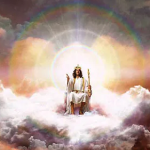
Ecclesiastes 3:11 says that God “has planted eternity in the human heart” (NLT). But as the Amplified Bible clarifies, that means he placed “a sense of divine purpose … a mysterious longing which nothing under the sun can satisfy, except God” in each person’s heart. The human quest for immortality is Satan’s distortion of this eternal truth: our souls are immortal, not our bodies.
Only one being is eternal: God. He declared his name to Moses in Exodus 3:14: “‘I AM WHO I AM. This is what you are to say to the Israelites: ‘I AM has sent me to you.’” Jesus affirmed his equality with the Father when he used the I AM name for himself: I AM the bread of life (John 6:35); I AM the light of the world (John 8:12); I AM the gate (John 10:9); I AM the good shepherd (John 10:11); I AM the resurrection and the life (John 11:25); I AM the way, the truth, and the life (John 14:6); and I AM the true vine (John 15:1). In Revelation 1:8, Jesus gives the final I AM proclamation: “I AM the Alpha and Omega.”
When the apostle John saw the vision of the eternal Jesus in all his glory—the I AM Jesus whose “eyes were like blazing fire,” his feet “like bronze glowing in a furnace,” and his voice “like the sound of rushing waters”—John “fell at his feet as though dead” (Revelation 1:14–16).
This is the Jesus who humbled himself to be laid in a feeding trough as a helpless infant. This is the Jesus who walked and ate and slept on earth for 33 years. This is the Jesus who bore our sins on the cross, then rose again the third day, and ascended to heaven after 40 days of post-resurrection ministry. This is our King Eternal.
As we celebrate his lowly birth, let’s also celebrate his eternal reign. And may the incongruency of those two facts fill our hearts with humble gratitude and lifelong devotion.
Dig Deeper
Meditate on the portrait of Jesus that John paints in Revelation 1:9–16. What impacts you most about this vision of our King Eternal?
Read Revelation 19:11–21. What picture of our King Eternal is painted in this passage? How does this passage also reflect Jesus as King of Justice and Righteousness as well as King of Authority?
When the darkness of circumstances or culture presses in on you, reflect on the future reality of Revelation 22:1–5. What details in this description fuel your hope and faith?
Denise K. Loock
This devotion is part of our Jesus Is King series.
[1] Charlotte Alter, “The Man Who Thinks He Can Live Forever,” Time.com, September 20, 2023, https://time.com/6315607/bryan-johnsons-quest-for-immortality/.