
Why Is Peace So Elusive?
Suddenly, the angel was joined by a vast host of others—the armies of heaven—praising God and saying, “Glory to God in highest heaven, and peace on earth to those with whom God is pleased.” Luke 2:13-14 (NLT)
Peace on earth. The angels’ message has echoed through the centuries, yet its 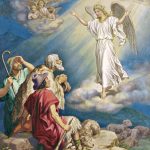 fulfillment has eluded us. Conflicts between nations, religions, and ethnicities continue. Disputes among family members divide them. Strife within each person’s soul smolders.
And does the elusiveness of peace then prove that it’s an illusion—a fantasy of the idealist? Absolutely not. The problem isn’t the possibility of peace; it’s our inability to grasp the means of its fulfillment.
Edmund Sears, the lyricist of “It Came upon the Midnight Clear,” wrestled with the elusive nature of peace over 150 years ago. The nation churned with conflict in 1849—not over election results but over national policy. Would states entering the union be Free States or Slave States?
Note Sears’s longing for peace in this stanza:
Yet with the woes of sin and strife
The world has suffered long;
Beneath the angel strain* have rolled
Two thousand years of wrong;
And man, at war with man, hears not
The love-song which they bring;
O hush the noise, ye men of strife
And hear the angels sing.
As he observes in other stanzas, “the Babel sounds” of human conflict have drowned out the song “from heaven’s all gracious King.” And Sears urges those “beneath life’s crushing load / Whose forms are bending low” to “rest beside the weary road / and hear the angels sing.”
Ironically, though, Sears fails to mention—even once in the carol—the one person who can “hush the noise” and bring peace. And that’s an omission thousands of other people have made and continue to make.
The peace equation will never be solved apart from Jesus. Any suggested solution that omits His name will result in discord, not peace. The rest of the angels’ message must be proclaimed: “For unto you is born this day in the city of David, a Savior, who is Christ the Lord” (Luke 2:11).
Let’s avoid Sears’s mistake this Christmas. When others speak of peace, let’s bring the Prince of Peace into the conversation. God’s love-song, which the angels sang in a star-spangled sky over 2,000 years ago, begins and ends with Jesus, our Savior, Christ the Lord.
DIG DEEPER:
Read Luke 2:8-14. Based on the sequence of statements the angels made, what do you see as the relationship between joy and salvation, between glory to God and peace on earth?
Read Romans 16:17-20. What warnings and admonitions does Paul give the church in Rome? How does he encourage them in verses 19-20? Do his words encourage you too?
Read Ephesians 2:13-18. What does Paul say to the Ephesians about the source of peace and the availability of peace?
To read all five stanzas of Sears’s hymn, go to http://cyberhymnal.org/htm/i/t/itcameup.htm
Denise K. Loock
*In this case, strain means “a passage of verbal or musical expression.” (http://unabridged.merriam-webster.com/unabridged/strain)
Note: If you like this devotion, you might want to check out Denise’s devotional collections: Open Your Hymnal and Open Your Hymnal Again