
What’s Most Important?
James said, “We should not make it difficult for the Gentiles who are turning to God.” Acts 15:19
As the apostles and other first-century Christians obeyed Jesus’s command to “make disciples,” churches were founded in Judea, Samaria and beyond. Paul and Barnabas took the gospel to cities throughout modern-day Turkey on their first missionary trip (Acts 13-14).
But not everyone celebrated the exciting report about Gentile Christians when Paul and Barnabas returned. Circumcision was the God-ordained mark of His covenant with Israel, so how could Gentiles consider themselves Christians if they didn’t adhere to this practice? A sharp dispute developed between those who believed it was required and those who didn’t (Acts 15:1-5).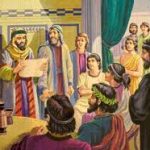
When the church leaders gathered in Jerusalem, they listened to the testimonies of Peter, Paul, and Barnabas. Then James, the brother of Jesus, reminded everyone of what the prophets had said regarding Gentile believers (v. 17). Finally, he suggested a compromise that would bring unity: Circumcision wouldn’t be required, but Gentile Christians would be asked to embrace two Mosaic dietary laws so Jewish and Gentile Christians could eat fellowship meals together (vv. 19-21).
Two principles established at this council meeting can help us sort out what’s important and what isn’t when controversy arises. The first is contained in the apostles’ letter: “It seemed good to the Holy Spirit and to us not to burden you” (v. 28). The second is the response of those who received the letter: “The people were glad for its encouraging message” (v. 31).
To burden each other with a list of dos and don’ts rarely cultivates unity. Far better to focus on what helps us live and work together—“faith expressing itself in love” (Galatians 5:6). This selfless love asks us to “honor one another above ourselves … to live in harmony … [to] practice hospitality” (Romans 12:10,16). This love produces encouragement, harmony, and growth.
Under the Holy Spirit’s guidance, James helped his fellow Christians to discard the less important and to grab hold of the most important. Will we follow their example? The Holy Spirit will help us if we ask. Let’s seek His direction on cultivating unity. Let’s discard the tendency to burden others and embrace every opportunity to encourage one another.
DIG DEEPER:
Read Acts 15:1-33. List the points Peter, Paul, and James make in favor of compromise. How can their example help us settle disagreements in our churches?
Read Paul’s account of the Jerusalem council meeting in Galatians 2:1-10. What additional insights about the meeting does he provide?
Read Galatians 5:1-15. What issues and problems arise in a church if we allow the less important to take precedence over the most important?
Proverbs 18:13 says, “To answer before listening—that is folly and shame.” Do you consider yourself a good listener? What might help you become a better listener?
Denise K. Loock
This devotion is part of a series on the Book of Acts.