
A Godly Man’s Gruesome Death
When the members of the Sanhedrin heard this, they were furious and gnashed their teeth at [Stephen]. … They all rushed him, dragged him out of the city, and began to stone him. Acts 7:54, 57–58
Stephen was one of the deacons chosen in Acts 6 to help with the various ministries of the Jerusalem church. Luke describes him as “a man full of God’s grace and power, [who] performed great wonders and signs among the people” (6:8). We might expect that someone so fully devoted to God and so effective in ministry would live a long time—like Billy Graham or some other well-known evangelist.
But that was not Stephen’s story.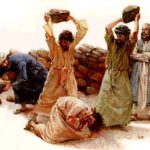
Those who opposed the first-century Christians and their zeal to spread the gospel produced false witnesses and twisted Stephen’s gospel message into what they considered blasphemy “against Moses and against God” (6:11). Stephen was arrested and brought before the Jewish council, the Sanhedrin, to defend himself.
In Acts 7, Stephen delivered a convicting message as his defense, ending with “you stiff-necked people! Your hearts and ears are still uncircumcised. You are just like your ancestors: You always resist the Holy Spirit” (7:51). Enraged, the council members dragged Stephen out of the city and stoned him (vv. 54–58).
Why would God allow the light of such a man to be snuffed out? Why does he allow any Christian to be persecuted—to die because of their witness? There are no simple answers to those kinds of questions.
But here’s what stops me from accusing God of injustice or cruelty: the witnesses at Stephen’s stoning “laid their coats at the feet of a young man named Saul” (v. 58). Saul, who became Paul, carried the gospel to many countries, established numerous churches, and wrote one-third of the New Testament.
Acts 8:1 says that Saul approved of Stephen’s stoning. But what seeds of truth were planted in Saul’s heart that day? What did he think when Stephen cried out, “I see heaven open and the Son of Man standing at the right hand of God”? (7:56). Maybe God buried that seed of truth deep in Saul’s heart, and maybe Stephen’s stoning was the first step in Paul’s journey to faith in Jesus Christ.
When the inexplicable happens, we have a choice: accuse God of cruelty and unfairness or cling to what we know of his character. He is a good God. He is a wise God. Part of our faith journey is learning and accepting that he can transform every tragedy into an opportunity for us or for someone else to grow in their faith.
Is there an inexplicable tragedy that you’re holding in your heart, maybe even holding against God? Ask the Holy Spirit to heal that wound and to build your confidence in God’s goodness and wisdom—even when you cannot discern any explanation for what he allows.
Dig Deeper
In 2 Corinthians 4:7–18, Paul writes about tough times he had experienced as a missionary. What is his attitude? How might his perspective help you in tough times?
Read Stephen’s sermon in Acts 7:2–53. What stands out to you about his message? Why do you think God preserved Stephen’s words in the Bible?
In Philippians 1:12–26, Paul talks about his imprisonment. What does he long for? Why will he be content even if that doesn’t happen? How can you apply his perspective to your current situation?
Denise K. Loock
This devotion is part of our series on the book of Acts.