
A Remnant Preserved
But God sent me ahead of you to preserve for you a remnant on earth and to save your lives by a great deliverance. So then, it was not you who sent me here, but God. He made me father to Pharaoh, lord of his entire household and ruler of all Egypt. Genesis 45:7-8
Can you look beyond evil and see God at work? Joseph was the victim of much evil, yet he still saw how God could use and did use evil circumstances for good.
Joseph’s older brothers were filled with jealousy and hatred fueled by their father’s favoritism and Joseph’s dreams of the whole family bowing down to him. So the brothers sold him into slavery and Joseph ended up in Egypt. But God prospered Joseph in Egypt, even in prison where he was put in charge of the prisoners (Genesis 39:2-6, 21-23). God also enabled Joseph to interpret the dreams of two prisoners which later led to the opportunity to interpret Pharaoh’s dreams (40:1-23).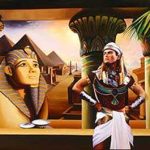
Impressed with Joseph’s wisdom, Pharaoh acknowledged God’s presence in Joseph’s life by re-naming Joseph with a name that means “God speaks” or “He lives” (Genesis 41:39-57). Pharaoh also made Joseph second in command in Egypt. With that authority, Joseph stored surplus grain for seven good years in sufficient supply to last through the seven-year drought which followed.
God not only helped Joseph put his past behind him but also gave him a wife and two sons. God revealed the upcoming famine too and how to handle it. Joseph named his elder son Manasseh, which means “causing to forget” and his younger son Ephraim, which means “double fruitfulness.” By leaving the past in the past, Joseph was able to move forward in faith and become an integral part of Egypt’s success during hard times.
Because the severe famine affected both Egypt and Canaan, Joseph’s family had to come to Egypt or starve (42:1-5). Given the opportunity to seek revenge, Joseph forgave his brothers instead. He did not airbrush their wrongdoing; he acknowledged that they had been cruel, but God transformed their evil acts into a way to save many lives (45:5-8; 50:20).
God preserved Joseph’s family and provided conditions for it to become a great nation. Because Joseph’s father and brothers were shepherds, the Egyptians wouldn’t mingle with them, for they loathed shepherds (46:34). If the family had stayed in Canaan, they probably would’ve assimilated into a pagan culture instead of becoming a distinctive people, set apart for God’s purposes.
Sometimes we can’t see God’s hand when we’re in the middle of suffering, but looking back, we can discern his good plans for us and for others.
Reflect on your past. Can you see how God turned unjust or unfortunate circumstances into an opportunity to do something good in your life or in others’ lives? What did he teach you then and what is he teaching you now because of that “great deliverance”?
DIG DEEPER
Read Genesis 15:13-14. We see God’s sovereignty long before the events in Joseph’s life. What had God told Abraham would happen in the future? How did Joseph’s suffering lead to the fulfillment of that promise?
Read Genesis 50:22-26, Exodus 13:19, Joshua 24:32, and Hebrews 11:22. Joseph knew the prophecy God had revealed to Abraham. He would be buried in Egypt, but what did he request be done with his bones some years later, and how was this carried out?
Read Genesis 45:1-11. What does this passage teach us about the blessings of forgiveness and restoration? See also Joseph, Part Two.
Denise K. Loock
This devotion is part of our But God series.