
The Gift of Hope
The scepter will not depart from Judah, nor the ruler’s staff from between his feet, until he to whom it belongs shall come and the obedience of the nations shall be his. Genesis 49:10
Held captive by Hamas for 505 days, Omer Shem Tov said his resolve to maintain hope was fueled by believing “this is the path and this is what God gave me.” He also held on to hope by thinking of loved ones: “I cannot leave my family. It cannot end like this.”[i]
Hope is the flame that keeps the will to live ablaze, regardless of the darkness of our circumstances. Although the Israelites were refugees, not captives, during the last days of Jacob’s life, they needed the hope of returning to the land God promised them to keep their faith aflame.
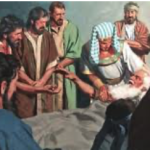 God provided that hope through a dying man’s words. One of the earliest prophecies proclaiming the kingship of Jesus occurs in Genesis 49:10 when Jacob, nearing death, blessed each of his sons. I wonder if Judah thought his father was delusional when Jacob spoke of a king’s scepter and a ruler’s dominion over many nations.
Jacob’s family had no kingdom to rule. They didn’t even have a country anymore. Due to a famine, they were dependent on Pharaoh’s charity. No doubt Jacob’s sons knew about the covenant God had made with their great-grandfather Abraham. Jacob had surely told them what God had said to Abraham: “I will make a great nation of you. In you all the nations of the world will be blessed” (Genesis 12:2). But that promise must have seemed like an old man’s fantasy to the eleven brothers as they tended their flocks in Goshen.
So why did God give Jacob this prophecy to pass on to Judah? Maybe God wanted to assure Judah and his brothers that Egypt was not their home or their destiny. God had chosen the descendants of Abraham, Isaac, Jacob—and now Judah—to carry the promise of the coming Messiah, who would reign over all nations. Maybe God wanted to remind Judah and his brothers that the identity God gave them, his chosen people, was far more permanent than the labels the Egyptians gave them—refugees and later, slaves.
Did Judah carry that prophecy in his heart as assurance that God would keep his promises? I hope so. When my life becomes a daily uphill climb over rocky terrain, I turn to God’s promise of a king too. When violence and crime and injustice seem unending, I cling to the truth that King Jesus rules from heaven today and will bring justice and peace to the earth when he returns.
You may not feel like celebrating Christmas this year—ruined relationships, gnawing grief, or financial hardship may have crushed your will to live and stolen your joy. Instead of turning your thoughts inward, turn them heavenward. The King of Hope sits on his throne, the scepter of love, justice, and grace firmly in his hand. Let him give you the gift of hope. He longs to place it in your heart.
Dig Deeper
Read Jacob’s entire prophecy about Judah in Genesis 49:8–12. What other glimpses of Jesus do you see in Jacob’s words and metaphors?
Meditate on what God said to Abraham in Genesis 12:1–3. In what ways has God already fulfilled that prophecy? In what ways will it be fulfilled in the future? Do you think that prophecy relates to us? How so?
If you’re feeling lonely or even abandoned this Christmas, how might the following promises soothe your hurting heart: Psalm 34:8, Isaiah 43:1–2, Jeremiah 31:3, Zephaniah 3:17.
Denise K. Loock
This devotion is part of our Jesus Is King series. A version of it also appears in our December devotional, Restore the Joy.
[i] Max Tendler, “Omer Shem Tov Says ‘Hope’ Guided Him Through 505 days in Hamas Captivity,” The Chronicle, September 10, 2025, https://dukechronicle.com/article/duke-university-omer-shem-tov-israeli-hostage-hamas-speaks-on-505-days-in-captivity-gaza-20250910.