
Worthy of Wholehearted Worship
Who is he, this King of glory? The Lord Almighty—he is the King of glory. Psalm 24:10
When the magi arrived in Jerusalem, their question was “Where is the one who has been born king of the Jews?” (Matthew 2:2). King Herod called for the chief priests and teachers of the law, who correctly answered, “In Bethlehem.” They knew Scripture well enough to identify Micah’s prophecy about that city: “Out of you will come a ruler who will shepherd my people Israel” (Matthew 2:6; Micah 5:2).
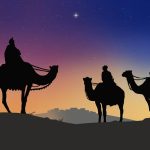 But the magi seemed to understand something Herod, the chief priests, and the teachers of the law missed. The magi said they had come to worship the newborn king, not just celebrate his birth.That one word hints at what King David, the author of Psalm 24, understood too: The Messiah was more than the heir to David’s throne, more than a political leader. The Messiah was the Lord Almighty, the King of glory.
In Psalm 24, David identifies “God their Savior” (v. 5) as the “Lord strong and mighty, the Lord mighty in battle.” He uses four Hebrew names to identify the Messiah. In several verses, he uses Lord, Yahweh, the covenant-making, covenant-keeping God of the nation of Israel (Exodus 3:6). In verse 10, he pairs that name with Almighty, Saba, which is also translated Lord of Hosts or Lord of Angel Armies. This is God’s military commander name—affirming his invincible power over all his enemies. In verse 5 David uses God, Elohim, the Creator God of the world and everything in it (Genesis 1). Also in that verse, he uses Yeshua, translated salvation, which in Greek becomes Jesus. Used together, all these names proclaim the deity of the Messiah.
Herod felt threatened by the newborn king and tried to kill him. Later, the religious leaders, threatened by Jesus’s teachings and his influence over the people, also sought to kill him. In our culture, many try to destroy the gospel message—that there is one way to heaven through accepting Jesus Christ as Lord, Savior, and King.
As we approach Christmas, we are faced with the same opportunity the magi, King Herod, and the religious leaders were given. Do we treat Jesus as a historical figure, maybe an admirable religious leader? Or do we see Jesus as the King of glory, worthy of adoration and allegiance?
This year, let’s make a conscious effort to emphasize that Jesus is more than a baby, even more than our Savior. Let’s join King David and the magi in bowing before him as the King of glory, who deserves our wholehearted obedience and worship.
Dig Deeper
What does David say about those who worship the King of glory in Psalm 24:3–4? How well does that description reflect your heart and life?
Read Philippians 2:1–11. If we are wholeheartedly devoted to Jesus, the King of glory, how will that impact the way we interact with others, according to verses 1–4?
Reflect on the magi’s story as recorded in Matthew 2. What obstacles did they encounter on their faith journey? How did they overcome them? What obstacles are you facing? How will you overcome them?
To prime your worship of King Jesus, you may want to revisit the lyrics of the classic hymn “O Worship the King.”
Denise K. Loock
This devotion is part of our Jesus Is King series.