
Justice and Righteousness for All
For to us a child is born, to us a son is given, and the government will be on his shoulders. And he will be called Wonderful Counselor, Mighty God, Everlasting Father, Prince of Peace. Of the greatness of his government and peace there will be no end. He will reign on David’s throne and over his kingdom, establishing and upholding it with justice and righteousness from that time on and forever. Isaiah 9:6–7
I don’t remember the first time I said the words “That’s not fair,” but I’ve said or thought them hundreds, if not thousands of times. Humans crave justice—fair play, right acts rewarded, and wrong acts punished. Of course, we usually want to be the one who sets the boundaries of fairness, rightness, and wrongness too. But that privilege belongs to God, not us.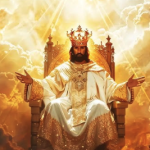
The prophet Isaiah served under two godly kings (Jotham, Hezekiah) and one extremely wicked king (Ahaz), so he understood the relationship between justice and righteousness. Without righteousness, there can be no justice. In chapter 9, Isaiah delivers a prophecy about a future kingdom where “there will be no more gloom for those who were in distress” (v. 1). “On those living in the land of the shadow of death a light [will] dawn” and they will rejoice (vv. 2–3).
What will bring about such a dramatic change? A new king on David’s throne and an everlasting kingdom characterized by justice and righteousness (9:7). Isaiah, of course, was looking forward to the day when Jesus will reign on earth. He is the only one who could accurately be called “Wonderful Counselor, Mighty God, Everlasting Father, Prince of Peace.”
Reflect on those powerful names for a few minutes. Wonderful Counselor—a king who is extraordinarily wise, one able to understand all things and resolve every problem in the best possible way. Mighty God—a king who is invincible in battle and triumphs over every enemy. Everlasting Father—a loving, compassionate king whose reign will never end. Prince of Peace—a king who will ensure that every one of his people will live contented, fulfilled, and secure lives.
Does that kind of king and kingdom seem like a fantasy? When we look around at our self-absorbed politicians and fractious society, the words of Isaiah may seem fantastical. But they are not. Part of the joy of Christmas is looking beyond the manger and the cross to the wonderful day when Jesus will reign as that king and establish that kingdom of justice and righteousness.
And as we wait for that glorious day, we can prepare the way for that kingdom by following the counsel given in Micah 6:8: “And what does the Lord require of you? To act justly and to love mercy and to walk humbly with your God.” How can you live out those directives in your home, your church, and your community?
Dig Deeper
Read Isaiah 9:6–7 several times. In what ways do the phrases “the government will be on his shoulders” and “of the greatness of his government and peace there will be no end” fuel your hope for the future and calm your fears about the present?
Psalm 89 is a tribute to the King of Justice and Righteousness (vv. 1–37) as well a plea for him to honor his commitment to Israel (vv. 38–51). In light of the psalmist’s frustration, why do you think he ends the psalm with “praise be to the Lord forever” (v. 52)? How is that mindset a model for us?
Amos 5:24 is a well-known biblical phrase: “Let justice roll on like a river, righteousness like a never-failing stream.” But what does the context of that verse (vv. 18–27) say about what that justice and righteousness will look like? And what does Amos counsel God’s people to do? (vv. 14–15)?
Denise K. Loock
This devotion is part of our Jesus Is King series.