
Authority over All
In my vision at night I [Daniel] looked, and there before me was one like a son of man, coming with the clouds of heaven. He approached the Ancient of Days and was led into his presence. He was given authority, glory, and sovereign power; all nations and people of every language worshiped him. His dominion is an everlasting dominion that will not pass away, and his kingdom is one that will never be destroyed. Daniel 7:13–14
“It’s easier to ask for forgiveness than for permission.” My brother-in-law adopted that philosophy when he ran into roadblocks at the rules-oriented Christian school where he taught. He shared that principle with me when I took a position there. That pragmatic philosophy worked well for both of us on occasion. It reflects the human tendency to think that we, not authority figures, know best what will be successful in our set of circumstances.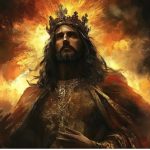
As I’ve progressed on my faith journey, I’ve realized that mindset isn’t biblical. Scripture teaches us that “people’s lives are not their own; it is not for them to direct their steps” (Jeremiah 10:23). Whether we are teachers under the authority of a principal and school board, an employee under a manager, or a CEO under civil laws, God calls us to “be subject to the governing authorities, for there is no authority except that which God has established” (Romans 13:1).
That biblical principle is as true today as it was when Daniel had the vision recorded in chapter 7 of his book. He was living under the authority of the Babylonian king Belshazzar, who publicly mocked the God of the Jewish exiles (Daniel 5:1–4). Daniel may have wondered why God allowed such blasphemy just as we may wonder why God permits so many to blaspheme his name and mock his laws today.
In the vision God gave Daniel, four great beasts, representing world leaders, rise to power (7:3–8). Each is more violent and destructive than the previous one. But then God, the Ancient of Days, exerts his authority (7:9–12) and the Son of Man, Jesus, is given authority over all nations and peoples (v. 13).
God reminds Daniel that human authorities—good and evil—are all subject to his divine authority. And that comforts me. Even when human authorities establish rules, procedures, or laws that frustrate, befuddle, or infuriate me, I can be confident that the Ancient of Days is sitting on his throne and the Son of Man has the final say in all matters.
However you feel about the state of your family, your city, your country, or the world, set it aside and replace it with Daniel’s vision of the Ancient the Days, God the Father, and the Son of Man, Jesus, standing in authority over all. That vision always settles my heart and calms my fears. I pray that it does the same for you today and throughout 2026.
Dig Deeper
Read Daniel 7. How did the angel interpret the vision of the four beasts for Daniel? What was Daniel’s reaction? What is your reaction to this vision of future events?
Prayerfully read Romans 13:1–7. Who are the authority figures in your life? How can you apply the principles of Romans 13 to your attitude toward them?
Proverbs 3:5–6 may be familiar verses, but what other counsel is given in Proverbs 3:1–4 and 7–12 that can help us “trust in the Lord” and “not lean on our own understanding”?
Denise K. Loock
This devotion is part of our Jesus Is King series.