
Samaria Revisited
After they had further proclaimed the word of the Lord and testified about Jesus, Peter and John returned to Jerusalem, preaching the gospel in many Samaritan villages. Acts 8:25
Samaritans and Jews generally despised each other in New Testament times. Centuries earlier, the Assyrians had overrun the Northern Kingdom of Israel (722 B.C.) and carried off much of the population of Samaria, the capital of the ten northern tribes at the time. The Assyrians had then resettled the land with people from other countries they’d conquered. The result was a mixed race and a mixed religion.*
But Acts 8 records that many Samaritans responded to Philip’s preaching. He wasn’t one of the twelve apostles, but he had been 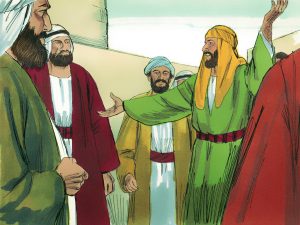 appointed as a deacon (Acts 6:1-6). After the stoning of Stephen and threat of more persecution, Philip went to Samaria. God blessed his ministry with miracles of healing and deliverance from unclean spirits (Acts 8:5-8).
When the apostles heard about what was happening, they sent Peter and John to Samaria (Acts 8:17). Ironically, John and his brother James had once wanted to command fire to come from heaven to consume Samaritans who had refused Jesus’s request for hospitality. Jesus had rebuked James and John (Luke 9:51-56).
How did John feel about praying for Samaritans? Some of those saved under Philip’s preaching may have been the same people John had wanted to destroy. Did he remember Jesus’s conversation with a Samaritan woman beside a well? Jesus told her that he was the promised Messiah, and she believed him. Her excited testimony caused the whole town to come hear him for themselves and believe (John 4:4-42). John and the other disciples hadn’t understood why Jesus interacted with Samaritans. Several decades later, when John wrote his Gospel ,he added a clarification to the story: “For Jews do not associate with Samaritans” (John 4:9).
Jesus had told the disciples to be his “witnesses in Jerusalem, and in all Judea and Samaria, and to the ends of the earth (Acts 1:8). Did he specifically name Samaria because he knew they’d probably avoid it otherwise? John and Peter had seen people from many different nations being saved. They stopped to preach in other towns of Samaria on their way home.
Who’s on your witness list and on your church’s membership list? Think about people you may have avoided or overlooked that God may want you to reach. Who might God want you to connect with or invite to church so they too can hear the gospel?
DIG DEEPER
Read Luke 10:25-37. Jesus not only walked through Samaria several times, he used a Samaritan in a parable. What is this parable usually called today? Who would be the surprise hero of the story to the original audience? How would their reaction differ from our reaction?
Read 2 Kings 1:1-17. When James and John wanted fire to come down from heaven, they may have been thinking of something that had happened in this area many years before. Why was fire from heaven a good thing in Elijah’s story?
Some translations include a statement by Jesus when he rebuked James and John in Luke 9:51-56: “You do not know what kind of spirit you are of. For the Son of Man did not come to destroy men’s lives, but to save them.” Though this was added later, why does it seem appropriate here?
Nancy J. Baker
This devotion is part of a series on the book of Acts.
* Fleming H. Revell, The Revell Bible Dictionary, Grand Rapids, 1990, 887-88.
Comments
I like how you pointed out that John had earlier wanted to call fire down on Samaria. I had not thought of that. Did Jesus know that John would one day be back preaching there? Having laid aside much of His Godly abilities He may not have known John would at the time, but He knew He would send some of them there to preach. He knew they would be given another chance and that some if not all who had rejected Him then would receive the message and accept Him later. What a merciful and loving God we have.
Thanks,Kenny, for your feedback.