
Whether Many or Few
The brothers immediately sent Paul to the coast, but Silas and Timothy stayed in Berea. Acts 17:14
Paul and his team continued to have highs and lows on their second missionary journey. Jealous Jewish leaders ran them out of Thessalonica, then followed them to Berea and harassed them there (17:1–13). But in the midst of all that hardship, some Jews and Greeks responded to the gospel (17: 4, 12). Still, Paul’s team thought it best that he travel on to Athens and wait for them there (17:15).
Did Paul resist their counsel or throw a pity party for himself? No. The Holy Spirit helped him discern that leaving Berea was the best course of action. Timothy and Silas remained in there to continue the work.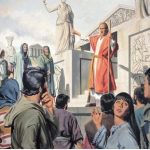
Had God told Paul of his plans for his apostle in Athens? The Bible doesn’t say. But when Paul arrived, he was “greatly distressed to see that the city was full of idols” (v. 16). So, he “reasoned” with folks in the synagogue and interacted with people in the marketplace (v. 17). He was even invited to the Areopagus, the highest court in Athens to present his “strange ideas” and explain what they meant (v. 20).
Sometimes God redirects us in ways we don’t expect or welcome. By using adversity or even injustice, he may remove us from a situation and place us somewhere else. These setbacks may be difficult to understand or accept. But we can learn from Paul’s example. Because he was sensitive to God’s voice, he saw beyond the people who opposed him and the circumstances that hindered his ministry. He recognized God’s hand in the adversity, so he was ready to minister in Athens when he arrived.
In Thessalonica, “some” Jews were persuaded and a “large number of God-fearing Greeks” (17:4). In Berea, “many of the Jews believed, as did also a number of prominent Greek women and many Greek men” (17:12). What were the results in Athens? “A few men became followers of Paul and believed … and a number of others” (v. 34). That suggests the amount of converts in Athens was far less than the total in Thessalonica or Berea. But God isn’t as concerned with quantities as we may be.
Paul was in the right place at the right time for God to work in the hearts of the idol-worshiping Athenians. To me, that means God sometimes places me in situations and settings that will benefit a few rather than a lot. And that’s okay. I want to be sensitive to his leading no matter where I am and no matter how little impact I observe.
Where has God placed you in this season? Are you surrounded by opposition? Maybe God is using you to influence many. Or has he put you in a situation where you see very little fruit? Follow Paul’s example: Minister wherever God places you and leave the results in his hands.
Dig Deeper
Why were the Bereans of “more noble character” than the Thessalonians, according to verse 11? Would you describe your attitude toward God’s Word as “great eagerness”? Why?
Read Acts 17:22–31. Paul’s sermon in Athens is often cited as an example of how to connect with those of a different faith. How does he connect with the Athenians? What can we learn from his method?
Consider the reactions of the Athenians recorded in Acts 17:32–34, then read 1 Corinthians 1:18–25. What inspired Paul to keep preaching the gospel even when some people sneered? What example does that set for us?
Denise K. Loock
This devotion is part of our series on the book of Acts.