
Time for an Attitude Adjustment?
So when Peter went up to Jerusalem, the circumcision party criticized him, saying, “You went to uncircumcised men and ate with them.” Acts 11:2-3
The news must have spread quickly. Peter had eaten with Gentiles. What had prompted the apostle to violate Mosaic law so blatantly? He had jeopardized his reputation and sullied the testimony of the church. How could he be so foolish?
The circumcision party—Jewish Christians who believed circumcision was a prerequisite of salvation—was incensed. Without knowing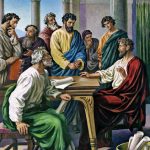 the what or the why of Peter’s trip to Caesarea, those who cherished the Mosaic law judged the apostle. Conflict among Christ’s followers—Satan must have been chortling with glee.
But at least the circumcision party gave Peter an opportunity to explain when he returned to Jerusalem. He told them about his vision, about the Holy Spirit’s unmistakable direction, and the way Cornelius’s household responded to the gospel. Then Peter asked, “If God gave them the same gift he gave us who believed in the Lord Jesus Christ, who was I to think that I could stand in God’s way?” (Acts 11:17).
The criticizers “had no further objections” (v. 18). The Holy Spirit moved among them, extinguishing their anger and rekindling their joy: They praise God saying, “So then, even to Gentiles God has granted repentance that leads to life” (v. 18). Their willingness to accept what the Holy Spirit had done for Cornelius and his family ended the conflict.
How careful we must be in our churches, ministries, and daily interactions. God cannot be boxed in tradition, contained in methodology, or housed in habits. He moves in ways we may have never imagined or experienced (Isaiah 55:8-9; Ephesians 3:20). Before we criticize the actions of another Christian, church, or ministry, shouldn’t we graciously admit that God may indeed be moving in a new direction with new methods?
Lord, give us the grace to listen before we criticize, to humbly admit that you are far more creative, far more expansive than we may imagine. Keep us attuned to the Spirit’s voice so that we recognize it when others speak and sense his presence when they act in unconventional ways.
DIG DEEPER
Read Acts 11:1-18. What do you think convinced the circumcision party that Peter had done what God wanted him to do? What proof did Peter give that his actions were God-ordained?
Read Luke 2:27-32, Luke 7:1-10, and Luke 23:46-47. How do the verses in Luke 7 and Luke 23 illustrate that Jesus came to be a “light for the Gentiles”?
Paul wrote the book of Philippians more than 20 years after the events of Acts 11. Read Philippians 3:1-9. What does Paul say is much more important than circumcision? How might that teaching apply to current controversies in the universal church?
For more on harmony between Jewish and Gentile Christians, see devotion on Ephesians 2:11-22.
Denise K. Loock
This devotion is part of a series on the Book of Acts.