
Always Doing Good
“Now, let us not become weary in doing good, for at the proper time we will reap a harvest if we do not give up. Therefore, as we have opportunity, let us do good to all people, especially to those who belong to the family of believers” (Galatians 6:9-10).
Peter and John had been jailed for healing a man, but their accusers couldn’t find grounds to keep them. Upon their release, the followers of Jesus prayed for more boldness and more miracles. God answered their prayer. A man named Aeneas who had been paralyzed and bedridden for eight years was healed when Peter prayed for him (Acts 9:32-35). Peter was then sought by some believers from a nearby town called Joppa. A woman named Tabitha [1] had become sick and died (Acts 9:36)
Peter went with them, and when he arrived, he was taken upstairs. “All the widows stood around him, crying and showing him the robes and other clothing Tabitha had made 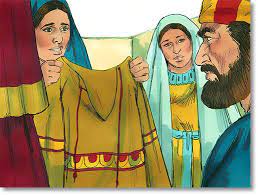 while she was still with them—she was always doing good and helping the poor (Acts 9:39).
Peter sent them all out of the room; then he got down on his knees and prayed. He may have immediately thought of something Jesus had done and probably received assurance to pray for a similar miracle. Of the twelve disciples, only Peter, James, and John, had seen Jesus raise Jairus’s daughter from the dead. There had been a commotion, with people crying and wailing loudly. Jesus had put everyone out of the room except the child’s father and mother and the three disciples. Jesus had taken the child’s hand and said to her, “Talitha, cumi,” (which means “Little girl, I say to you, get up!” Immediately the girl had stood up and began to walk around (Mark 5:35-42).
Now Peter turned toward the dead woman and said, “Tabitha cumi.” Did Peter hear Jesus’s words in his head as he prayed?
Tabitha opened her eyes, and seeing Peter, sat up. He took her by the hand and helped her to her feet. Then he called for the believers, “especially the widows,” and presented her to them alive (Acts 9:40-41). “This became known all over Joppa, and many people believed in the Lord” (v. 42).
Tabitha wasn’t saved by her good works—nor was Peter, and nor are we—but we’re all given good works to do so others may give glory to God (Matthew 5:16).
What good works has God given you to do?
Dig Deeper
What is said about doing good in Titus 3:4-8?
Who died in the early church and remained dead as recorded in Acts 7:1-60 and Acts 12:2? What does this say about God’s sovereignty? How do we know what to pray?
In Acts 9:32 (KJV), what are the women called? The word saint does not mean a perfect, sinless person. How is this translated in the NIV and other translations? Are you a saint?
Nancy J. Baker
This devotion is part of our series on Not-As-Famous Men and Women of the Bible.
___________________________________________________________________________
[1] The name Tabitha (Dorcas in Greek) means “Gazelle,” which is a beautiful, graceful deer https://www.blueletterbible.org/lexicon/g5000/kjv/tr/0-1/