
Road to Restoration
On this day, atonement will be made for you, to cleanse you. Then, before the Lord, you will be clean from all your sins. Leviticus 16:30
Imagine returning to your estranged parents’ home only to discover they have changed the locks on the doors and deny your request to enter. You’re willing to return and make amends, but they’re unwilling to receive you. Consequently, your relationship with them remains broken.
“To return to a former state or place” is one way to define the Hebrew word for repentance.[i] The Jewish New Year, Rosh Hashanah, has always been more than a celebration for Jews; it is a call to repentance, a call to do their part in restoring fellowship with God—confess their sins and come home to him.
Ten days later on Yom Kippur, the Day of Atonement, Jews celebrate God’s acceptance of their repentance.[ii] In biblical times, the high priest offered sacrifices on the people’s behalf, and God’s requirements for entrance into his presence were satisfied.[iii]
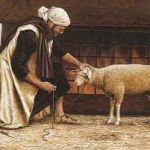 As essential as the people’s repentance was on Rosh Hashanah, God’s willingness to forgive their sins and his merciful acceptance of their sacrifices was more crucial. Perhaps the most meaningful segment of the day’s ceremonies featured two goats. One was sacrificed on the altar as a substitutionary death—for “without the shedding of blood there is no forgiveness of sins” (Hebrews 9:22 ESV). Then the high priest laid his hands on the other goat’s head, symbolizing the transfer of the people’s sins to the goat. That goat was led into the wilderness never to be seen again, indicating the sins were gone forever. The relationship between God and his people was restored, and they could fellowship with their holy God once more.
At the beginning of Jesus’s earthly ministry, John the Baptist declared that Jesus had come to take away “the sin of the world” (John 1:29). Later, Jesus said he had come “to give his life as a ransom for many” (Matthew 20:28). Once for all, Jesus’s death on the cross removed our sins, opening the door into God’s presence so we may enjoy continual fellowship with him (Hebrews 10:10).
Yom Kippur may be a Jewish holiday, but Christians too can celebrate the joyous truth of sins forgiven and fellowship with God restored. How can we express our gratitude for such a wondrous gift? Romans 12:1–2 gives the answer: present our bodies as a living sacrifice to be used for his glory.
How will you express your thanks for the privilege of access to God’s presence and intimate fellowship with him?
DIG DEEPER
Think of what a stain remover does to spots. How does that image help you understand passages like Isaiah 1:18, Psalm 51:7, and Hebrews 9:19–22?
Read Leviticus 16. What connections do you see between what the high priest did on this day and what Jesus did for us on the cross? Which of these connections is most meaningful to you?
Read Matthew 26:26–28. In what ways do Jesus’ actions at the Last Supper reflect the high priest’s actions on the Day of Atonement?
You might also want to read Rosh Hashanah and I Lay My Sins on Jesus.
Denise K. Loock
[i] “Repent.” “H7725 – šûḇ – Strong’s Hebrew Lexicon (niv).” Blue Letter Bible. Accessed 9 Oct, 2024. https://www.blueletterbible.org/lexicon/h7725/niv/wlc/0-1/.
[ii] The Hebrew word for atonement, kaphar, means “to be covered over” or “to obliterate.” “H3722 – kāp̄ar – Strong’s Hebrew Lexicon (niv).” Blue Letter Bible. Accessed 9 Oct, 2024. https://www.blueletterbible.org/lexicon/h3722/niv/wlc/0-1/.
[iii] To learn more about what modern Jews do on the Day of Atonement, read “Atonement for Sin in a Post-Temple Era,” Jewish Voice, https://www.jewishvoice.org/read/blog/atonement-sin-post-temple-era.