
Spiritual Authority
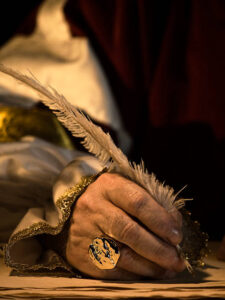
“I will take you Zerubbabel My servant, the son of Shealtiel,” says the Lord. “I will make you like a signet ring; for I have chosen you,” says the Lord of Hosts.” Haggai 2:23
Zerubabbel was born in exile in Babylon. He was appointed governor and led nearly 50,000 people back to rebuild the temple in Jerusalem (Ezra 2:64-65). The altar and foundations were begun, but opposition arose from some Samaritans—a mixed race of Jews and Gentiles, including Assyrians (2 Kings 17:24–33). They volunteered to help, but Zerubabbel rejected them because they didn’t worship the God of Israel. When they petitioned the Persian ruler, King Artaxerxes, he shut down the work. Harassed and discouraged by the poor conditions they’d found in the ruins of Jerusalem, the people began to build their houses instead of the temple.
Sixteen years later, God spoke to them through two prophets: Haggai and Zechariah. The temple wouldn’t be completed through strength, wisdom, wealth, or military power, “’but by my Spirit,’ says the Lord Almighty” (Zechariah 4:6).
When the new temple was completed, the people reacted in two ways. Those who’d never seen the grandeur of Solomon’s temple sang, shouted, and praised the Lord. But the older generation wept profusely because this temple couldn’t compare in size or splendor to the temple they remembered (Ezra 3:8–13). God responded, “Who dares despise the day of small things, since the seven eyes of the Lord that range throughout the earth will rejoice when they see the chosen capstone in the hand of Zerubbabel?” (Zechariah 4:10).
Haggai told Zerubbabel he’d been specifically chosen to be God’s signet ring (Haggai 2:23). A signet ring represented an important person’s authority on a sealed document and guaranteed its promises (Genesis 38:18). Four years later, Zerubbabel put the capstone in place and the temple was finished (Zechariah 4:7–10).
Zerubbabel was a descendant of David, in the line of kings, but since Israel was under Persian rule, he could be no more than governor. By making Zerubbabel his signet, God reversed a judgment pronounced on his family (1 Chronicles 3:17–18). God renewed his promise that the Davidic line wouldn’t die out but would one day give birth to Israel’s Messiah. Zerubbabel is recorded in Christ’s genealogy (Matthew 1:12 and Luke 3:27).
Don’t be surprised or discouraged when you face opposition to something you know God wants you to do. God is watching over you and will empower you by his Spirit to persevere to completion.
Dig Deeper
What was Zerubbabel compared to in Zechariah 6:12-13? How did another prophet use this same imagery in Isaiah 11:1-16? To whom was he referring?
Read Haggai 1:1-14. What happened when the Israelites disobeyed God and built their own houses instead of the temple? What has happened when you disobeyed God?
Why was the temple important to God? What did it represent? See Exodus 29:45, Zechariah 8:3, and 2 Corinthians 6:16. Where is his temple now?
See another devotion on this time period: Cyrus.
Nancy J. Baker
This devotion is part of our Not-As-Famous Men and Women of the Bible series.